
Bristol has attracted attention as a property investment hotspot in the South West of England. For homeowners, this raises an important question: could investing in your existing property improve its appeal, create more usable space and potentially increase its value?
If you own a home in Bristol and are considering an extension, loft conversion, garage conversion or improvements to your garden, choosing the right project matters. The aim is to make your property work better for your household while considering what future buyers may value.
Hallett Construction provides building services in Bristol, including extensions, garage conversions, loft conversions and structural alterations. Whether you need an additional bedroom, a larger kitchen or a more practical living space, understanding your options is the first step towards planning a successful project.
The key is to invest in improvements that suit your property, meet a genuine need and fit your budget. Although carefully planned building work can improve a home’s appeal, no project guarantees a particular increase in market value.
When a location attracts property investment interest, homeowners may start considering how to make better use of the property they already own.
Moving to a larger house is not always the preferred option. You may already have a convenient location, established connections to the area and a home you enjoy. Creating additional space or improving the existing layout could offer an alternative to moving.
However, there is an important distinction between an area’s property market performance and the financial return from renovating an individual home.
A report naming Bristol a property investment hotspot does not mean every home will increase in value by the same amount. The effect of building work depends on the property, its location, the quality of the design, the cost of the project and the needs of potential buyers.
Before committing to an improvement, consider what you want to achieve and whether the proposed work makes sense for your circumstances.
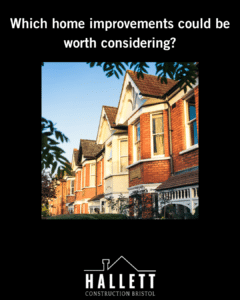
The best project depends on the type of property you own, the space available and the changes you want to make. Four options are worth considering.
A house extension can be a practical solution when your existing home no longer meets your needs.
Perhaps your kitchen feels cramped, your family needs a larger dining area or you want a living space that opens onto the garden. An extension can provide an opportunity to improve the layout without having to move.
Depending on the property, options may include a rear extension, a side extension or a larger project involving more than one floor.
Before deciding on an extension, consider:
A well-planned extension should feel like a natural part of the property. Adding space without considering how it connects to the rest of the house can produce a less useful result.
For homeowners planning to stay for several years, the everyday benefits may be just as important as any potential effect on resale value.
Find out more about Hallett Construction’s building and extension services in Bristol.
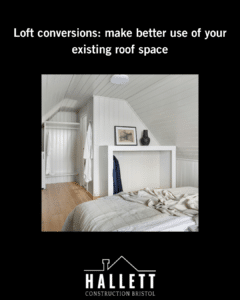
If you need another bedroom or a dedicated home office, a loft conversion may be worth exploring.
Converting an existing roof space can create additional accommodation without extending into the garden. This can be particularly appealing where outdoor space is limited.
However, not every loft is suitable for conversion. The available headroom, roof structure, floor strength, staircase position and fire-safety requirements all influence what is possible.
A successful project needs to consider how the new room will connect with the rest of the house. There is little benefit in creating an attractive bedroom if the staircase takes up too much space or the layout makes the room difficult to use.
It is also important to establish the likely costs before proceeding. Structural changes, insulation, windows, heating, electrical work and internal finishes can all affect the final price.
Building regulations approval is required when converting a loft into habitable space. Planning permission may also be necessary, depending on the proposed work and the property.
If you are considering making better use of your roof space, explore loft conversions in Bristol.
A garage can provide an opportunity to create more living space without building a conventional extension.
If your garage is rarely used for parking or storage, converting it could give you an additional room for working, relaxing or accommodating changing family needs.
Possible uses include:
The work may involve insulation, damp protection, flooring, windows, ventilation, heating and electrical installations. Structural changes may also be necessary, depending on the existing building.
Before choosing a garage conversion, consider what you would lose by giving up the garage. Parking and secure storage can be valuable, particularly in areas where off-street parking is limited.
You should also establish whether the finished room will be comfortable throughout the year and whether it can be integrated properly with the rest of the house.
The potential benefit comes from creating space that is genuinely useful, rather than simply changing the purpose of the garage.
Learn more about garage conversion services in Bristol.
Improving your property does not always require a major internal building project.
For some homeowners, the garden offers the greatest opportunity to make the property more enjoyable and appealing. A practical outdoor layout can provide space for dining, relaxing, entertaining or family activities.
Depending on the property, improvements could include a patio, garden walls, better access, pathways, improved drainage or a more effective connection between the house and garden.
The most appropriate changes will depend on the size and condition of the outdoor area, how it is used and how much maintenance you want to undertake.
Avoid spending money on features simply because they are fashionable. A straightforward, well-planned garden may be more useful than an elaborate design that is expensive to maintain.
It is also worth considering how the outdoor space complements any proposed extension. Planning the two together can help ensure that the finished property feels balanced and that sufficient garden remains.
If outdoor improvements form part of your plans, discuss the proposed work with Hallett Construction to establish which elements can be included within its services.
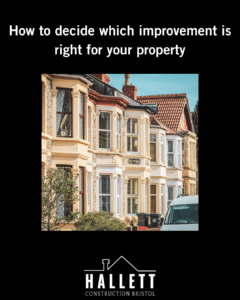
Choosing a project can be difficult when several options appear attractive. The following steps can help you make a more informed decision.
Start by looking at what is missing from your current home.
Do you need more room for a growing family? Is your kitchen too small? Would an additional bedroom make the property more practical? Could an unused garage provide the space you need?
Being clear about the problem will help you avoid spending money on unnecessary work.
Once you know what you need, consider which type of project could provide the best solution.
For example, a loft conversion may be suitable if you need an extra bedroom but want to preserve your garden. An extension may be more appropriate if your main priority is a larger kitchen and dining area.
A garage conversion could be worth considering if the existing structure offers enough space and you do not need the garage for its current purpose.
Compare the practical benefits, limitations and likely costs of each option.
The price of building work varies according to the size of the project, structural requirements, materials, access, specification and internal finishes.
Ask for a detailed quotation based on an agreed scope of work. Check what is included, what is excluded and whether additional professional fees or approval costs need to be budgeted for.
It is also sensible to allow for unexpected issues, particularly where work involves an existing structure.
Do not base your decision on an assumed increase in property value. The financial case should remain reasonable even if the eventual resale outcome differs from expectations.
Some building projects may fall within permitted development rights, while others require planning permission. Building regulations are a separate matter and may apply even when planning permission is not needed.
The requirements depend on the work, the property and any relevant restrictions.
Before starting, consult Bristol City Council’s guidance on building work approvals and the Planning Portal’s home improvement guidance.
Properties in conservation areas, listed buildings and homes subject to other restrictions may require additional checks.
The contractor you choose can have a significant influence on how well the project is planned and delivered.
Ask for a written quotation, a clear description of the proposed work and information about relevant experience. Check that the contractor has appropriate insurance and can explain how the project will be managed.
It is also worth discussing timescales, payment arrangements, how changes will be agreed and which approvals or specialist services may be required.
A clear agreement before work begins can help reduce misunderstandings later.
Think about how the finished space will serve you over the coming years.
Will it make daily life easier? Will it suit the property’s overall layout? Could it appeal to future buyers who need similar space?
If increasing resale value is a major reason for undertaking the work, consider obtaining an independent property valuation or advice from a local estate agent before committing to a substantial investment.
This can help you compare the likely cost with the potential market benefit, although no valuation can guarantee the price a buyer will eventually pay.
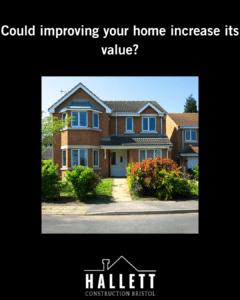
Home improvements can influence how a property is perceived by buyers, but the outcome depends on several factors.
The additional space needs to be useful, the design needs to suit the house and the finished work needs to meet relevant requirements. Local buyer preferences and the prices achieved by comparable properties also matter.
An extension may make a house more attractive to a family looking for a larger kitchen. A loft conversion may appeal to buyers who need another bedroom. A garage conversion may be beneficial where additional living space is more important than parking.
However, construction costs can exceed the value added to the property. A project that improves comfort and functionality may still be worthwhile for someone planning to stay in the house for many years, even if the full cost is not recovered at resale.
There is no universal percentage that can reliably predict the return on every extension, loft conversion or garage conversion in Bristol.
The best starting point is to assess the property, understand the complete project cost and seek local market advice if the financial return is central to your decision.
Every property has its own requirements. The age of the building, the layout, the available space and the condition of the existing structure all affect what can be achieved.
Local planning considerations may also influence the design and scope of a project.
Hallett Construction offers building services in Bristol, including extensions, loft conversions, garage conversions, brickwork and structural alterations.
For homeowners considering an improvement, discussing the existing property and the intended outcome is a practical way to establish which options may be suitable.
The first conversation should focus on your needs, the work involved and the decisions that need to be made before a project can be properly priced.
The supplied Business Live article is the intended source for this claim. Its publication date, ranking criteria and underlying evidence should be checked before the ranking is presented as a current fact. Different property rankings may measure house-price growth, rental returns or other investment indicators.
Extensions, loft conversions and garage conversions may improve a property’s functionality and appeal. Garden improvements may also make the home more attractive. The effect on market value depends on the property, local demand, design and total project cost.
An extension may be worthwhile if it provides useful space and the cost is proportionate to the benefits. Consider the layout, remaining garden space, construction requirements and likely appeal to future buyers before proceeding.
Neither is automatically better. A loft conversion may provide extra accommodation while preserving outdoor space. An extension may offer more flexibility for a larger kitchen or living area. The best option depends on the property and what you need to achieve.
Some garage conversions may be permitted development, but restrictions and other requirements can apply. Building regulations approval will normally be required when a garage is converted into a habitable room. Check the position for your property before work starts.
Costs depend on the size, design, structural requirements, access, materials, finishes and professional fees. Obtain a project-specific quotation rather than relying on a general figure that may not reflect your property.
That depends on the property’s condition, the work required, the likely cost and the expectations of buyers in your local market. Smaller repairs or improvements may be sufficient in some cases. Seek local property advice before committing to substantial building work solely for resale.
Look for relevant experience, appropriate insurance, clear written quotations and a defined project scope. Ask how the work will be managed, what is included in the price and how changes or unexpected issues will be handled.
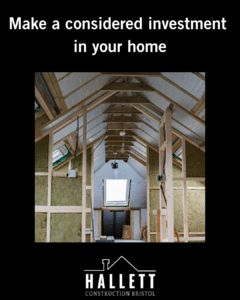
Bristol’s property investment appeal provides a reason to think carefully about the potential of your home. However, the right improvement is not necessarily the largest or most expensive project.
An extension, loft conversion, garage conversion or outdoor improvement should be chosen because it suits the property, meets a genuine need and fits a realistic budget.
If you are considering improving your home in Bristol, Hallett Construction can help you explore the building options relevant to your plans.
Visit Hallett Construction’s building services in Bristol to find out more and enquire about your proposed project.