Keeping your home warm in the Winter? it’s not only about turning up the heating. If your property is losing heat through the roof, walls, floors, windows or doors, your heating system has to work harder to maintain a comfortable temperature.
For homeowners considering Bristol home insulation, understanding where heat is being lost is an important first step. The right insulation can help improve comfort, reduce unnecessary heat loss and make a wider home improvement project more effective.
Good insulation helps slow the movement of heat between your home and the outside environment.
In winter, that means:
However, insulation is not a universal solution. The right approach depends on the property, its construction, existing insulation, ventilation and the condition of the building.
That is why insulating your home in Bristol should start with understanding the building rather than simply choosing the cheapest insulation option.
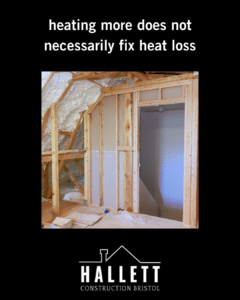
A common response to a cold home is to increase the heating.
This can make the house warmer, but it does not necessarily address the reason the property feels cold in the first place.
If heat is escaping quickly, the heating system has to replace that lost heat continuously. You may therefore find yourself heating the property more often while some rooms still feel uncomfortable.
Insulation works differently. Rather than simply producing more heat, it helps the heat you have already generated stay inside the building for longer.
This is particularly relevant when planning wider Bristol home improvements, where insulation can form part of a broader strategy for improving the performance and comfort of the property.
The amount of heat lost depends on the construction and condition of each property, but several areas are commonly worth investigating.
Heat rises, so the roof and loft area can be an important part of a home’s thermal performance.
If loft insulation is inadequate, damaged or missing, warm air can escape into the roof space.
Improving insulation in this area can be relatively straightforward in some properties, although access, ventilation and existing construction should be considered before work begins.
Walls can also contribute to heat loss, particularly in older properties with limited insulation.
The appropriate solution depends on the type of construction. Solid walls, cavity walls and traditionally built properties can require very different approaches.
This is one reason why insulation should not be treated as a one-size-fits-all product.
Cold floors can make rooms feel uncomfortable even when the air temperature appears reasonable.
Depending on the construction, floor insulation may form part of a wider renovation or improvement project.
Older or poorly performing windows and external doors can contribute to draughts and heat loss.
Insulation alone will not necessarily solve these problems. The condition of seals, frames and surrounding construction should also be considered.
Many homes in and around Bristol were built using construction methods and materials that differ from modern properties.
That matters when considering insulation.
Older buildings may have solid walls, suspended timber floors, traditional materials or other characteristics that need to be understood before work begins.
Applying modern solutions without considering the existing building can create problems rather than solve them.
For homeowners planning Bristol home improvements, the better approach is to understand how the property has been built and then decide which improvements are appropriate.
There is plenty of advice online about keeping a home warm. Some of it is useful, but simplistic recommendations can lead homeowners in the wrong direction.
More is not automatically better.
The correct insulation solution depends on where it is being installed, the existing construction and how moisture and ventilation are managed.
Two homes on the same street can have completely different construction and insulation requirements.
The age, materials, layout and previous alterations all matter.
A cold room could be caused by several factors.
Poor insulation may be one. Draughts, damp, windows, heating distribution, building defects or ventilation could also contribute.
Price is important, but it should not be the only consideration.
The scope of work, materials, preparation, workmanship and long-term suitability all matter when comparing quotes.
Hallett Construction approaches home improvement work as part of the wider building rather than treating individual elements in isolation.
That matters when insulation is being considered alongside other work.
A practical process is to:
This approach can be particularly useful when insulation forms part of a larger renovation, extension or structural project.
If your home feels difficult to keep warm, consider the following steps.
Is the problem throughout the house, or limited to particular rooms?
Patterns can provide useful clues about where further investigation may be needed.
Think about when the property was built and whether it has been extended, renovated or altered.
Previous work can affect the way different parts of the building perform.
Check whether insulation is present and whether there are obvious gaps or areas that may need attention.
Cold external walls, draughts around windows and doors, and cold floors can all affect comfort.
Avoid treating insulation as a standalone product purchase.
Consider how it interacts with ventilation, moisture, heating and any other planned work.
If you are unsure what solution is appropriate, getting the property assessed before committing to work can help prevent unsuitable improvements.

There is no single price for insulating a home because the cost depends on the property and the work required.
Important cost factors can include:
For that reason, homeowners should be cautious about online cost estimates that appear precise without knowing anything about the property.
A proper quote should make clear what work is included and whether additional preparation or finishing is required.
If your home feels cold, insulation is not automatically the first thing that should be changed.
There may be other issues that need attention first.
For example, persistent damp, significant draughts, defective windows, inadequate ventilation or problems with the building fabric could affect comfort.
The most effective improvement is therefore not always the one with the strongest marketing message. It is the one that addresses the actual problem.
Good home improvement work should consider more than the finished appearance.
It should also take account of:
This is particularly important when insulation is being incorporated into renovation or construction work.
Insulation can improve thermal performance, but every building has its own characteristics.
The goal is not simply to add insulation wherever possible. The goal is to create an appropriate solution for the property.
That means considering thermal performance alongside ventilation, moisture management, materials and the existing construction.
For homeowners planning larger Bristol home improvements, this whole-building approach can help ensure individual upgrades work together rather than creating isolated improvements.
Insulation helps reduce heat transfer, meaning less heat can escape from the property. This can make it easier to maintain a comfortable indoor temperature.
There is no single best option for every property. The appropriate solution depends on the building’s construction, condition and the location being insulated.
It depends on the property and where heat loss is occurring. The loft may be a practical starting point in some homes, while other properties may require attention elsewhere.
Not necessarily. Draughts are generally associated with unwanted air movement through gaps or poorly sealed areas. Insulation and draught-proofing address different problems.
It can be, but older properties may require more careful consideration because of their construction and materials.
It can make sense to consider insulation alongside renovation work, particularly when walls, floors, roofs or other parts of the building are already being altered.
Cold rooms, noticeable temperature differences and areas of the property that are difficult to heat can indicate that further investigation is worthwhile. However, these symptoms can have several causes.
Yes. Where appropriate, insulation can be considered as part of wider renovation, extension or improvement work.
Look beyond the headline price. Consider experience, the proposed scope of work, communication, workmanship, project suitability and whether the company understands the wider requirements of your property.
If your home is difficult to keep warm, turning up the heating may only address part of the problem.
Insulation can play an important role in improving thermal comfort, but the right solution depends on the building.
For homeowners considering insulating your home in Bristol, the starting point should be understanding the property, identifying the problem and deciding which improvements are appropriate.
Hallett Construction can help homeowners discuss wider building and improvement projects in Bristol and the surrounding areas.
Planning work on your home?
Book a call or request a quote to discuss your project.