If you need more space at home, moving is not always the obvious answer. For many homeowners in Bristol, the real opportunity is often already above their heads.
A loft conversion in Bristol can turn underused roof space into a practical living space while helping you avoid the cost, disruption and uncertainty that often come with moving house.
With rising property prices, changing family needs and more people working from home, making better use of existing space has become an increasingly sensible decision.
But before starting, many homeowners ask the same questions. Does a loft conversion add value? How much does a loft conversion cost in Bristol? Will planning permission be needed?
This guide explains seven reasons a loft conversion can be a smart investment, along with the practical considerations that matter before you begin.
A common piece of advice is simple: “Convert your loft because it adds value.”
That is often true, but on its own, it is incomplete.
Property value matters, but it is not the only factor. The best loft conversions work because they improve how a home functions day to day. They create usable space, reduce pressure on growing households, and make homes more adaptable for future needs.
Focusing only on resale value can lead to poor decisions such as creating awkward layouts, underestimating structural constraints, or overlooking planning and building regulations.
A better approach is to think of a loft conversion as both a practical lifestyle improvement and a long-term investment.
For guidance on planning and household projects, the official Planning Portal and GOV.UK building regulations guidance is a useful starting point.
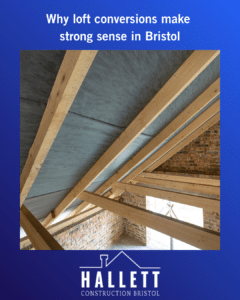
Bristol has a varied housing stock. Victorian terraces, 1930s semis, suburban family homes and modern townhouses. Many of these properties have loft spaces with genuine conversion potential.
At the same time, moving within Bristol can be expensive. Stamp duty, legal fees, estate agency fees and removal costs can quickly add up. In many cases, improving the home you already own can offer better value.
One of the biggest benefits of loft conversions in Bristol is the ability to create meaningful extra living space without sacrificing the garden or existing ground-floor layout.
A loft can become:
For growing families, an additional bedroom can relieve pressure without disrupting the family’s routine.
Remote and hybrid working have made dedicated workspaces more important than ever.
Many households benefit from adaptable rooms that can change over time.
Unlike some extensions, loft conversions often use space already within the building envelope. That can make them particularly efficient.
One of the most common questions is: Does a loft conversion add value?
In many cases, yes.
Creating additional usable floor area, especially an extra bedroom and bathroom, can make a property more attractive to future buyers.
The effect depends on several factors:
Poorly designed layouts can limit value. Low head height, awkward stairs or compromised room proportions can reduce usefulness.
That is why thoughtful design matters more than simply adding square footage.
For many homeowners, a loft conversion can help increase house value in Bristol while improving everyday living immediately.
The loft conversion cost in Bristol is often significant, but it can still compare favourably with the total cost of moving home.
Typical moving costs may include:
A loft conversion invests that budget directly into your own home.
A family in North Bristol may realise they need another bedroom as children get older. Moving could mean leaving schools, neighbours and familiar routines.
Instead, converting the loft can solve the space problem while keeping family life stable.
That balance between financial and practical is often where the real value lies.
Good home improvements should work not just for today, but for the next five to ten years.
A loft conversion can make a home more adaptable to changing circumstances.
Children get older. Space requirements change. Homes that once felt generous can start to feel constrained.
Dedicated work areas improve concentration and reduce the pressure on communal rooms.
A loft room can evolve into a nursery, office, teenager’s room, guest suite or hobby room.
That flexibility often makes the investment more resilient.
One reason an attic conversion in Bristol can be appealing is that it uses underutilised space already within the property.
Unlike outward extensions, loft projects usually preserve:
Many homes in Bristol have limited external space. Preserving outdoor areas can be just as important as gaining internal floor area.
In practical terms, it often means improving how the house works without materially changing how it sits on the plot.
Many homeowners worry about loft conversion planning permission in Bristol.
That concern is understandable, but planning permission is not always required.
Some loft conversions may fall under permitted development rights, depending on:
Even where formal planning permission is not required, building regulations approval is normally necessary.
This may cover:
Because parts of Bristol include conservation areas and varied housing types, professional advice early in the process can prevent costly redesign later.
Not every benefit shows up in a valuation.
Sometimes the strongest return is simply how the home feels.
A couple in Bristol may start with a spare room doubling as an office, a guest room and a storage space. Over time, it becomes frustrating — work spills into family areas, clutter builds up, and privacy disappears.
A loft conversion creates separation.
The office becomes a real office. The spare room becomes usable again. The house feels calmer.
That kind of practical improvement often matters more than homeowners expect.

Before speaking with loft conversion builders in Bristol, it helps to think through a few practical questions.
Be specific.
Is the goal: Extra
Clear priorities improve design decisions.
Important factors include:
The loft conversion cost Bristol will depend on:
A realistic early budget helps avoid redesign and disappointment.
Balanced advice matters.
A loft conversion is not always the right solution.
Some lofts may need major structural intervention.
Poor stair positioning can compromise existing rooms.
If structural work becomes extensive, the cost may rise significantly.
Certain properties may face tighter planning controls.
A proper survey and honest early discussion can save time and money.
A successful loft conversion is not simply about construction. It is about planning, structural understanding and practical design.
Working with experienced loft conversion builders in Bristol helps ensure that:
Useful next steps may include:
A loft conversion in Bristol can be a strong investment for the right property.
It can create extra living space, improve daily life, support future flexibility and help increase house value in Bristol, all while making better use of the space you already own.
The best outcomes usually come from clear planning, realistic budgeting and thoughtful design.
If you are considering whether a loft conversion could work for your home in Bristol, the next step is simple: understand what your loft can realistically deliver, what constraints may apply, and what would create the most practical long-term value.
In many cases, yes. A well-designed loft conversion can increase usable floor area and improve buyer appeal, especially where it creates an extra bedroom or flexible living space.
The cost depends on property type, structural requirements, design complexity and finish specification. A professional survey will provide a more reliable estimate.
Not always. Some projects may fall under permitted development, but this depends on the property and the nature of the proposed works.
Timescales vary depending on complexity, structural work and design scope. Early planning usually reduces delays.
No. Head height, roof structure, access and stair positioning all affect feasibility.