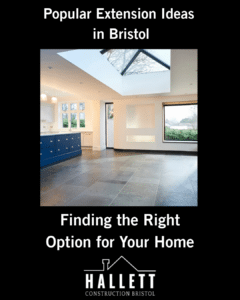
If your Bristol home no longer gives you the space you need, extending could be a practical way to improve it without moving.
There are many ways to add space to a property. You might want a larger kitchen and dining area, more room for family life, an additional bedroom or a better connection between your home and garden.
The right solution will depend on your property, your available space, your plans for the house and the type of improvement you want to make.
In this guide, we look at some of the most popular extension ideas in Bristol, what each option can offer and the key points to consider before deciding which type of extension is right for your home.
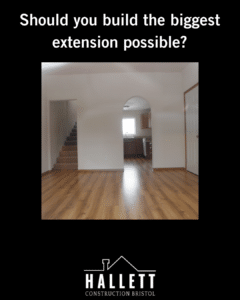
A good extension starts with a clear reason for building it.
Perhaps your kitchen is too small for the way you use it. Maybe you need somewhere for the family to eat, work or relax. You may need another bedroom, more storage or a better connection to the garden.
Before deciding on the design, it is worth identifying exactly what is missing from your current home.
Ask yourself:
What would make this house work better for us?
That question can help you avoid designing an extension simply because there is space available to build.
Bristol has a wide variety of properties, from older terraces and period homes to more modern houses. Their layouts, boundaries, gardens and surrounding buildings can all affect what type of extension is suitable.
The extension therefore needs to work with the property rather than being treated as a standard addition.
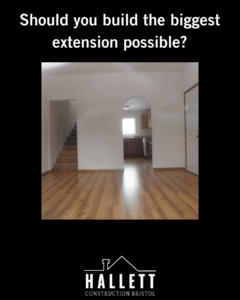
Not necessarily.
It can be tempting to use as much available space as possible when planning an extension. More floor space can seem like better value, but a larger extension can also have drawbacks.
It could reduce the size of your garden, affect the amount of natural light, require more structural work or create a layout that does not suit the way you actually use the house.
The same applies to choosing an extension simply because it is popular.
A rear extension may be ideal for one property, while a side return or smaller project could produce a better result for another.
The important thing is to look at the whole property before deciding how much space to add.
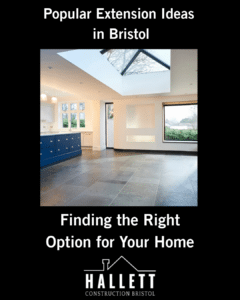
Rear extensions are a popular way to increase the usable space at the back of a home.
They can be particularly useful when an existing kitchen, dining room or living area feels too small or disconnected from the garden.
A rear extension could provide space for:
For many homes, the benefit is not simply having a bigger room. It is being able to create a more practical ground-floor layout.
A carefully considered rear extension can make a significant difference to how a home feels and functions.
A side return extension uses space that may otherwise be left as a narrow passage alongside the house.
This can be particularly useful for certain terraced and semi-detached properties where the side area is not being used to its full potential.
Adding to the side of the property can make an existing kitchen or dining area wider and more comfortable.
It can also provide an opportunity to improve the layout without extending as far into the garden as a larger rear extension might require.
There are several things to consider, including access, drainage, neighbouring properties, structural requirements and the amount of light available.
The available space needs to be assessed carefully before deciding whether a side return is suitable.
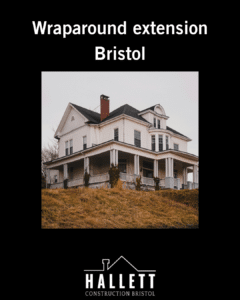
A wraparound extension combines a side extension with a rear extension.
This can create a substantial amount of additional ground-floor space and may allow several existing rooms to be reorganised.
For example, a wraparound extension could provide room for:
The main consideration is the amount of garden space that would remain after the extension is completed.
A wraparound extension can provide considerably more internal space, but it is important to consider whether that additional space is worth the reduction in outdoor area.
If you need more space upstairs as well as downstairs, a two-storey extension could be worth considering.
It can allow additional accommodation to be created over two floors while making use of a single extension footprint.
Depending on the property and design, this could provide:
A two-storey extension is a more substantial project than a smaller single-storey extension, so planning, design, structure and budget need to be considered carefully.
The advantage is that you may be able to create considerable additional space without extending as far into the garden as would be necessary with a large single-storey design.
For many households, the kitchen is one of the most important rooms in the house.
If your existing kitchen feels cramped, an extension can create an opportunity to rethink the entire ground-floor arrangement.
A well-planned kitchen extension could bring together:
Kitchen + dining + living + garden
This can create a more flexible space for everyday life and entertaining.
The aim should not simply be to create the largest possible kitchen.
Good planning considers storage, work surfaces, seating, circulation, natural light, access to the garden and how the room will be used from morning through to evening.
Not every home needs a large extension.
Sometimes a relatively modest addition can provide exactly the extra space that is missing.
For example, a smaller extension could be enough to:
This is an important consideration when looking at extension services in Bristol.
The largest possible extension is not always the most appropriate choice.
A smaller project can sometimes provide a better balance between additional floor space, garden area and overall cost.
An extension can also be part of a larger programme of improvements to your home.
For example, you may decide to use the project as an opportunity to address other areas of the property, such as:
Considering these elements together can help create a more consistent result.
Rather than adding an extension onto an unchanged house, you can look at how the new space and existing rooms will work together.
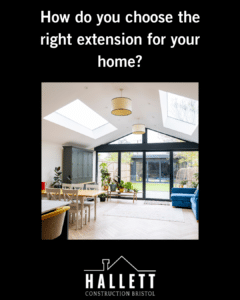
There are four useful questions to ask before choosing a design.
Start with the reason for the project.
Is your kitchen too small? Do you need another bedroom? Do you want more space for family life? Is your existing ground-floor layout difficult to use?
Write down the problems you want the extension to solve.
This gives the project a clear purpose.
Think about how you expect to use the finished space.
If you need a larger kitchen and dining area, for example, consider the amount of room required for the kitchen, table, seating, storage and movement between areas.
Avoid adding space simply because it is available.
The aim should be to create useful rooms rather than unused floor area.
The size and position of your home, garden, boundaries and neighbouring properties can all affect the options available.
Planning requirements also need to be established before you commit to a particular design.
Bristol City Council explains that some extensions require planning permission, while building regulations are a separate consideration.
Some work may fall within permitted development rights, but this depends on the property and the relevant conditions.
An extension should feel like a natural part of the property.
Consider:
These details can have a significant effect on the finished result.
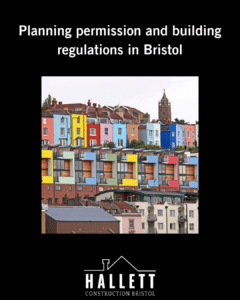
Planning is an important part of any extension project.
One of the most common misunderstandings is that planning permission and building regulations are the same thing.
They are not.
Planning permission considers matters such as the appearance, size, position and effect of development.
Building regulations deal with construction standards and areas such as structural safety, insulation, ventilation, drainage and energy efficiency.
Bristol City Council states that you may need planning permission for an extension and that building regulations are a separate requirement.
Some extensions can be built under permitted development rights if they meet the relevant requirements.
For example, certain larger single-storey rear extensions may qualify under permitted development subject to specific conditions.
However, additional restrictions can apply in Bristol.
These can include conservation areas, listed buildings and Article 4 Directions that remove permitted development rights for certain types of development.
This is why it is important to check the position for your particular property rather than assuming that a project will automatically qualify.
Other matters may also need to be considered, including party wall issues and protected trees.
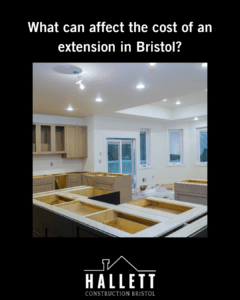
Extension costs vary considerably from one project to another.
The size of the extension is only one part of the calculation.
Other factors can include:
This is why it can be misleading to compare extension projects using floor area alone.
Two extensions of a similar size can have very different requirements.
A better starting point is to establish what you want the extension to achieve, understand the property and develop the project around those requirements.
Hallett Construction works with homeowners looking to improve and extend their properties in Bristol.
The starting point should always be the property itself and what you want to achieve.
That means considering the existing layout, the available space, the intended use of the new rooms and the practical requirements involved in bringing the project together.
The aim is to create an extension that fits the house and gives you space that is genuinely useful in everyday life.
Whether you are considering a rear extension, side return, wraparound extension, two-storey project or another form of home improvement, the right approach begins with understanding what your property needs.
An extension is not automatically the best solution for every home.
If the main problem is the layout rather than the amount of space, reorganising the existing rooms could be a better option.
If your garden is already limited, a large extension could remove more outdoor space than you want to lose.
There can also be situations where the scale and cost of the required work make moving house worth considering.
The purpose of an extension should be to improve your home in a way that makes sense for you.
If a smaller project solves the problem, there is little reason to build a larger one simply because you can.
Popular options include single-storey rear extensions, side return extensions, wraparound extensions, two-storey extensions and kitchen and dining extensions. The most suitable option depends on the property and the type of space you need.
You may need planning permission, although some extensions can qualify for permitted development rights if they meet the relevant conditions. Additional restrictions can apply to certain properties and areas of Bristol.
Building regulations are separate from planning permission and generally apply to extension work. They cover important areas of construction, including structural safety and energy efficiency.
Neither is automatically better. A rear extension may be suitable for creating a larger kitchen or living area, while a side return can make better use of an existing side passage.
A wraparound extension can be useful when you need a substantial amount of additional ground-floor space. However, it can reduce garden space, so the benefits need to be considered alongside the impact on your outdoor area.
Yes. Kitchen extensions are often used to create more room for cooking, dining, storage and family life. The design should consider the wider ground-floor layout rather than simply adding more kitchen units.
You may be able to, but additional planning controls can apply. Bristol City Council provides specific guidance for properties affected by conservation areas, listed building requirements and other planning restrictions.
Start with the problem you want to solve. Then consider the property’s layout, available space, garden, planning position, budget and how you want to use the finished rooms.
It depends on the property and your plans. Extending can make sense if you like your current home and location but need more space. Moving may be worth considering if the changes required would be too extensive or the property no longer suits your needs.
Think about the purpose of the extension, the design, planning requirements, building regulations, access, structure, drainage, budget and how the new space will connect with your existing home.
There are plenty of ways to extend a Bristol home, but the right option will always depend on the property.
A rear extension could be ideal for creating a larger kitchen and dining area. A side return could make better use of an unused passage. A wraparound extension could provide considerably more ground-floor space, while a two-storey extension could help if you need additional accommodation upstairs as well.
The important thing is to start with what your home is missing.
Think about how you want to use the property, how much space you actually need and what will work within the existing building and garden.
If you are considering an extension or other Bristol house improvements, Contact Hallet Construction.