What Adds More Value Loft Conversion or Extension?
September 30, 2025 by connor rogers
What Adds More Value Loft Conversion or Extension? A straight‑talk guide from your Bristol building expert (that’s me)
What Adds More Value: Loft Conversion or Extension?
Introduction to the Bristol Property Market
You’re thinking: “Should I convert my loft, or push out my walls with an extension?”
Great question. The short answer: it depends. But don’t worry, I’ll walk you through the numbers, the rules, and the “but what about my street?” stuff.
By the end, you’ll have a clearer picture of which option gives you more bang for your buck.
This post is built to help homeowners around Bristol (and the UK in general) decide between a loft conversion and a house extension.
I’ll refer to what we do at Hallett Construction (yes, that’s us in Bristol) for real‑world insight.
You’ll also find links to our related services (so you can view our work) and legal/regulatory and trend updates.
Let’s get into it.
1. What do we mean by “value”?
Before we argue loft vs extension, let’s define “value.” Here, value means how much extra your home is worth after you build it, minus the cost (and hassle).
It’s not just adding rooms, it’s adding saleable, desirable space.
Things that affect value:
Location/neighbourhood “ceiling price”
Quality of build, finishes, plumbing, insulation
Planning permissions or restrictions
How well the new space ties into the existing house
Market trends (what buyers are looking for now)
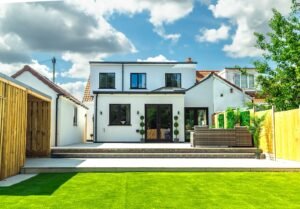
Bristol home extension
2. What the data says: Loft vs Extension
Let’s look at solid numbers (or as solid as building stats get):
According to Homebuilding, a good loft conversion can add ~ 20% to your home’s value (that’s using UK averages). (Homebuilding)
They say a double‑storey extension adds ~ 12%. (Homebuilding)
The Guardian reported that adding an extra bedroom & bathroom (via loft or extension) could boost value by ~ 20%+ in some cases. (The Guardian)
Resi, a UK residential architect firm, says loft conversions often give the best “value per square metre” when done well. (Resi)
But, extensions (especially single-storey) still offer good value depending on design and how much usable space you gain. (Homebuilding)
So yes, often a loft conversion can give more value, especially when your roof space is “convertible.” But there are many caveats.
3. Pros & Cons: Loft Conversion
Pros:
You’re using space you already roofed over — you don’t need to eat into your garden.
Less groundwork, foundations, or fuss with neighbours (sometimes).
Because it’s “up” you often avoid blocking light or overshadowing neighbours as much.
If you plan well, you can get a bedroom + bathroom up there, very attractive to buyers.
Usually lower cost per m² than big extensions (especially in tricky ground conditions).
Cons/challenges:
You need headroom. If your roof is too low or steep, structural alterations are costly.
Staircase, access, insulation, ventilation, fire safety, these eat cost.
If your roof is an odd shape (hips, dormers already, etc.), complexity rises.
Building regs, party wall, neighbours — still things to consider.
Sometimes buyers prefer ground‑floor living space expansion, so the “upstairs room” is less appealing to some.
4. Pros & Cons: Extension
Pros:
You get a large, flexible ground-floor space. Living rooms, kitchens, dining, big windows, open plan.
Better flow between indoor and outdoor (garden, patios).
Less concern about headroom or roof shapes.
Simpler to create large rooms with full-height ceilings.
More obvious “wow factor” if done well, floor-to-ceiling glass, fold doors, etc.
Cons:
Costs of foundations, drainage, groundworks, and structural support can be high.
You lose garden/yard space (which may itself have value).
More likely to require planning permission (if you push beyond permitted development).
Potential for more disruption during build (foundations, digging).
The extension must blend in or you risk looking like an odd add-on.
Loft Conversion Bristol
5. Which Adds More Value in Bristol / UK Today
Putting the theory aside, in practice:
In many UK areas, a loft conversion (if feasible) gives a higher percentage uplift because you’re adding a bedroom + bathroom in a way that doesn’t eat your garden.
Extensions do add value, too, especially when the house is small and you expand living/ kitchen space.
The “sweet spot” is when you pick the right size & design for your street. If everyone around has big rear extensions, you risk over‑building.
Also, check your “price ceiling”; no matter how much you build, your house can only sell up to what buyers in your area pay.
In short, a loft conversion wins if your loft is suitable. But if your roof is poorly shaped or your ground is troublesome, a good extension may beat a weak loft.
6. Legal, Planning & Building Rules to Watch
You can’t just build blindly. Here are checks (especially for Bristol / England):
Permitted Development Rights: Some loft conversions and single‑storey extensions are allowed under “permitted development” (no full planning needed) — but you must follow conditions.
Building Regulations: Fire escape, insulation (thermal & acoustic), structural stability, stair safety.
Party Wall Act: If work affects shared walls, neighbour rights matter.
Listed / Conservation Areas: In protected zones, stricter design and materials.
Planning Permission: For more radical extensions or bigger loft changes, you’ll need full planning.
If you’re unsure, part of what we do at Hallett Construction is planning application & design (we handle all building work).
8. How I’d decide — my build‑expert recommendation
If I were you (as a Bristol homeowner):
Check your loft’s structure & headroom. If it’s workable with minimal structural overhaul, the loft is attractive.
Survey your garden/plot constraints. If your yard is tiny, an extension may hurt too much.
Estimate the cost per square metre (loft vs extension) for your house. See what gives you more usable space per £ spent.
Check local “market ceiling.” Ask local agents: what do houses of your type sell for with 4 bedrooms vs 3?
Go for the option that gives you the most “usable” and “saleable” space, not just “more square metres.” A cramped extension or awkward loft won’t impress buyers.
In many cases, the winner is loft provided your loft is in decent shape because you gain a bedroom + bathroom, don’t lose yard, and lower risk.
But if your loft is a mess, go extension.
9. Example scenario (made-up but realistic)
Let’s say:
Your house: a semi in the outskirts of Bristol
Loft: already boxed, but low slope
Garden: medium, but you like the back garden
You want 1 extra bedroom + bathroom
Loft Conversion Option
Cost: moderate, but you need structural work & staircase
You gain a new upper‑floor bedroom + en suite
Adds ~20% value
Minimal garden loss
Extension Option
Build a ground-floor rear or side extension
Gain a large open plan kitchen/lounge / maybe dining
Cost is higher (foundation, groundworks)
Adds value, but maybe less % because you lose outside space
You might lean to the loft here if your roof shape allows.
But if your loft is awkward or needs huge work, the extension might give you a more comfortable, versatile space.
10. Tips to maximise value whichever you choose
Use good quality materials (insulation, windows, finishes). Buyers see half-finished work and count that against you.
Keep the design sympathetic to the existing house, don’t create “stuck-on boxes.”
Get the sunlight and views right (skylights, windows).
Plan for storage and practical layout (sloping roofs can waste space).
Consult a structural engineer/architect early, and avoid big surprises.
Get a builder you trust (like us at Hallett Construction).
11. Final Verdict: What Adds More Value?
On average, loft conversionsoften deliver higher value uplift (percentage-wise) compared to extensions, especially where the loft is already partly usable.
But extensions are strong contenders when your roof is awkward, your garden is deep, or you want big ground-floor space.
Always run the numbers for your specific house, budget, and area.
No matter what, a poorly built loft or extension adds very little, it’s quality + usability that drives value.